

'Roid Rage
Kennedy's steroid use, our risk
Last week Robert Kennedy, Jr. posted on his official HHS social media account a dystopian video of Kid Rock and himself working out in a sauna, shirtless. In the videos, Kennedy looks unnaturally muscular for a 72-year-old.

There has been plenty of publicity about Elon Musk’s use of ketamine, but much less about Kennedy’s use of anabolic steroids. Because he’s the lead health official for the nation, it’s fair to ask what he’s up to and what effect that has on us.
Kennedy’s steroid habit
When asked on a podcast two years ago about his diet and exercise routine, Kennedy replied that he was “on an anti-aging protocol from my doctor that includes testosterone replacement.” He went on to say that “I don’t use anabolic steroids or anything like that” but that he takes “a ton of vitamins and nutrients…I couldn’t even list them here because I couldn’t remember them all.”
Here, he’s already skirting the truth in a few ways:
Testosterone is an anabolic steroid.
Testosterone treatment is approved by the FDA only for men who have both: 1) a low testosterone level in the blood, and 2) a medical condition that is known to reduce natural testosterone levels, such as damage to the pituitary gland or the testes. Kennedy didn’t mention why he needs a “replacement” of his own natural testosterone, but there is no reason to think he’s had damage to these glands.
Testosterone should not be part of any medically-approved “anti-aging protocol”. Even in older men with low testosterone, the American College of Physicians recommends against prescribing testosterone “to improve energy, vitality, physical function, or cognition.”
This makes me wonder what else Kennedy – who frequently spouts falsehoods - is hiding about his steroid use.
In particular, Kennedy has not said how high a dose of testosterone he’s taking. High doses of testosterone cause abnormal muscle growth just as much as synthetic anabolic steroids. In one study, normal men given six-times-physiologic doses gained 7-13 pounds of muscle mass in just 10 weeks.
It sure looks to me (and also to a prominent body-builder and steroid connoisseur) like either Kennedy is taking high doses of testosterone or some of those “vitamins and nutrients” that he can’t remember are other anabolic steroids. Take a look at these pictures from over the years and see what you think:
Kennedy in 2000:

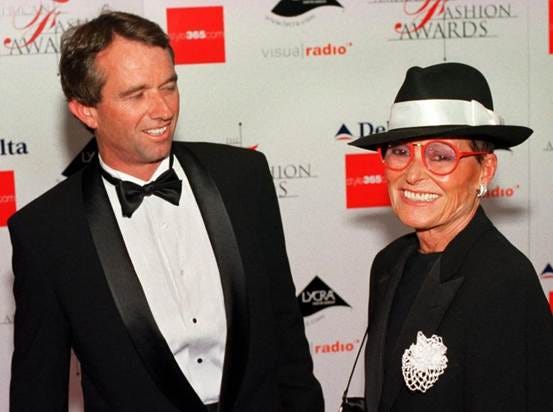
In 2005:

In 2012:
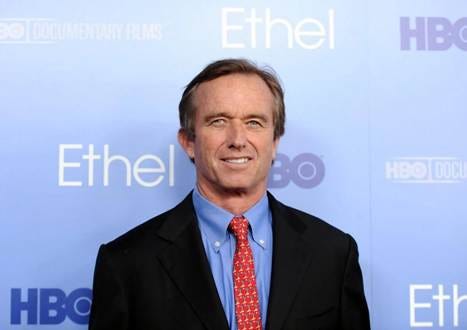
And today:

One longtime friend was quoted in a New Yorker profile as saying. “I look at pictures of him, and he’s unrecognizable,” and “It’s almost like he’s been body-snatched.”
Besides pumping up muscles, anabolic steroids cause aggressive behavior and increased sex drive. Some users undergo spells of rage and violence (here and here). In the New Yorker profile, a friend of Kennedy said, “his sense of humor is all but gone. There’s this anger”. As for his sex drive, Kennedy is described by close acquaintances as a “serial philanderer” and “sex addict” who maintained a diary in which he recorded his sexual conquests, with code numbers to indicate the specific acts performed.
Anabolic steroid use in the U.S.
Anabolic steroids wormed their way into American society through high-performance athletes. Soviet weightlifters were said to have been using them as early as 1952. Observers estimated that at least one-third of the U.S. track and field athletes in the 1968 Olympics were using them.
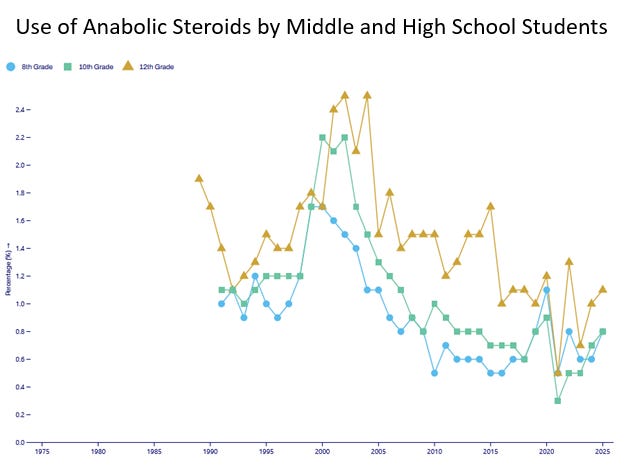
Over the decades since then, sports organizations have gradually clamped down on steroid use, though many athletes got away with doping by staying one pharmacologic step ahead of the testing procedures. But as use fell among competitive athletes, use surged in boys and young men who wanted to look muscular. By the early 2000s, about one in forty 12th-grade boys reported using anabolic steroids.
In 1990, Congress restricted anabolic steroids (including testosterone) as Schedule III drugs, based on their risk of physical and psychological dependence. (The Schedule III category includes ketamine and codeine; drugs in this group can still be prescribed by doctors, but under tighter rules than, say, antibiotics.) Newly-synthesized “designer” anabolic steroids were added to the Schedule III list in 2004.
With increasing restrictions on and testing for anabolic steroids, use has fallen in young men since 2000. About 1% of high school seniors now say they are using these drugs.
But during the same time, use of testosterone rose in middle-aged and older men. Much of that increase can be blamed on drug companies that ran big marketing campaigns between 2003 and 2014. Some of those ads promoted the companies’ testosterone preparations, but most were sneakier “condition awareness” ads that pushed the idea that men were unknowingly suffering from inadequate levels of natural testosterone - “low T”.
Those ads disappeared and testosterone use stabilized or fell after the FDA warned in 2014 that testosterone may increase the risk of heart disease. But since 2018, use of the hormone by middle-aged men has been rising again. By 2022, in one large study, about 1% of men overall and more than 2% of those age 45-64 were taking testosterone.
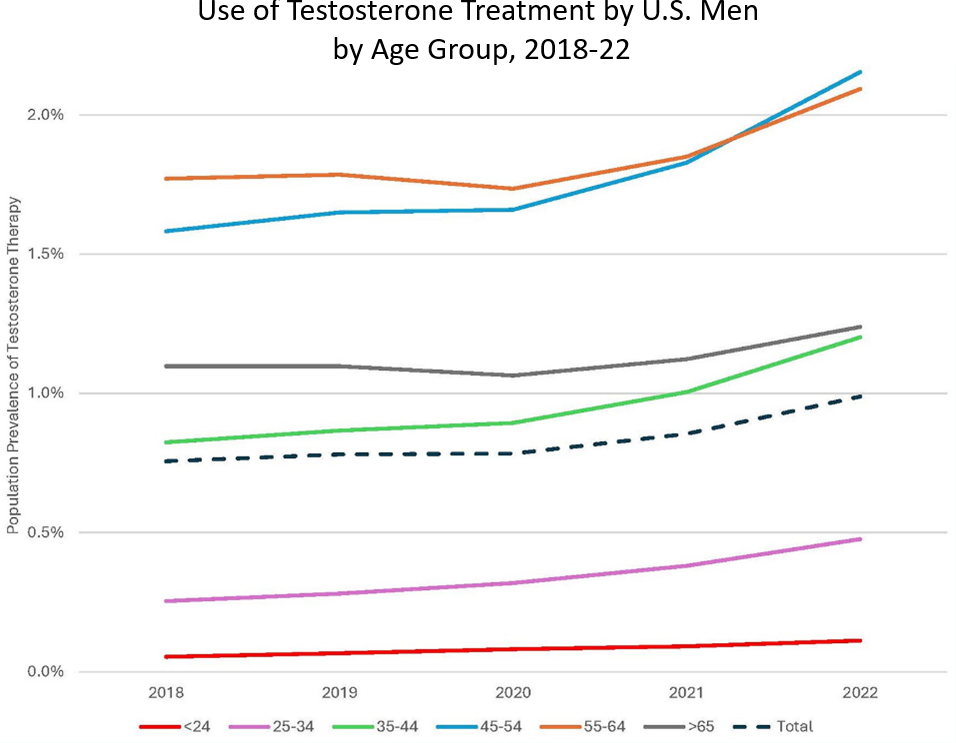

It’s a fair bet that almost none of the men taking testosterone today meet the FDA criteria for use. More than two-thirds are not even tested to determine their own testosterone levels before starting the drugs.
What are the health risks?
Most well-designed studies on testosterone involve small numbers of men who have age-related low testosterone levels, are treated in doses similar to natural amounts, and are followed for less than a year. In these studies, and one larger trial, testosterone in these doses doesn’t look dangerous. But studies that included tens of thousands of men found that testosterone roughly doubled the risk of potentially-serious blood clots.
Far more important, using synthetic anabolic steroids is extremely dangerous. Users have two to three times the risk of dying of heart disease or all causes combined.
And anabolic steroids are proved to be addictive. People using them experience withdrawal symptoms if they quit; lab hamsters will self-administer these drugs to the point of death.
What are the risks of Kennedy’s steroid use to us?
Why should we care what Bobby Kennedy does to his body? Three reasons:
First, there’s his deep hypocrisy of claiming that prescription drugs are among the root causes of the epidemic of childhood chronic diseases and that the FDA is just a “sock puppet” of the drug companies…and then using prescription drugs against even the FDA’s advice.
Second, there’s his reckless promotion of extreme muscle development to men. Kennedy is pushing the muscle-bound look not just as attractive but as healthy, when the anabolic steroids that produce it are killers. Unfortunately, this promotion of these addictive drugs is likely to work.
Third, there are the behavioral and psychiatric effects of anabolic steroids on Kennedy himself. As HHS Secretary, Kennedy already has enormous power – power which is dangerous in a man who has bursts of rage. And Kennedy seems likely to run for President, where his power would include the authority to drop nukes.
I once thought there was no way Americans would vote a man as unhinged as Kennedy into the White House. The twice-election of Donald Trump taught me otherwise.
Thank you for writing this!